

Considering Bathroom Changes for a Loved One: A Guide for Families and Carers

Bathroom changes are often first considered by someone looking in from the outside. A partner, adult child, or carer may begin to notice small shifts in routine or behaviour long before a serious incident occurs. Knowing what those changes mean — and how to respond without causing distress — can feel difficult.
This guide explores the signs families and carers often notice, the health and age-related changes behind them, and how to approach bathroom adaptations in a way that protects dignity, privacy, and independence.
The Early Signs Families and Carers Often Notice
In many cases, the first clues are subtle. Someone may start spending longer in the bathroom, or bathing less frequently than they used to. There may be hesitation around showering, particularly if the bathroom has a bath or raised shower tray. Carers often notice loved ones holding onto walls, towel rails, or furniture for balance, even if they don’t mention feeling unsteady.
These changes are rarely talked about openly. Many people adapt quietly, adjusting routines to avoid discomfort or risk. Over time, however, these workarounds can indicate that the bathroom is becoming physically demanding or anxiety-provoking.
How Health and Age-Related Changes Affect Bathroom Use
Using a bathroom safely requires a combination of balance, coordination, strength, and confidence. As people get older, these abilities can change even in the absence of a specific diagnosis.
Joint stiffness or arthritis can make bending, stepping into a bath, or reaching uncomfortable. Reduced balance or slower reactions can increase fear on wet floors. Visual changes can affect depth perception, particularly around bath edges or steps. Fatigue or breathlessness may make standing for long periods difficult.
These changes often develop gradually, which is why the bathroom may stop working well long before someone describes themselves as unwell.
Recognising When Independence Is Becoming Fragile
One of the most important indicators for families and carers is a shift in how someone feels about managing on their own. This might appear as reluctance to ask for help, rushing through personal care to “get it over with”, or becoming frustrated or embarrassed when support is offered.
Loss of privacy can feel more distressing than loss of physical ability. When someone begins to feel that bathroom routines are no longer private or predictable, confidence can decline quickly. This is often the point at which adaptations are considered not to change behaviour, but to preserve dignity.
How to Start the Conversation Gently
Conversations about bathroom difficulties can be sensitive. Many people fear that raising the topic means losing independence or being judged.
Families often find it helps to focus on comfort and ease rather than problems. Framing changes as ways to make everyday routines less tiring or safer can feel less confronting than discussing ability or age. Introducing ideas gradually — such as better lighting or improved flooring — can open the door to wider conversations later.
Using inclusive language and avoiding assumptions can help keep the conversation collaborative rather than directive.
Understanding the Range of Bathroom Changes Available
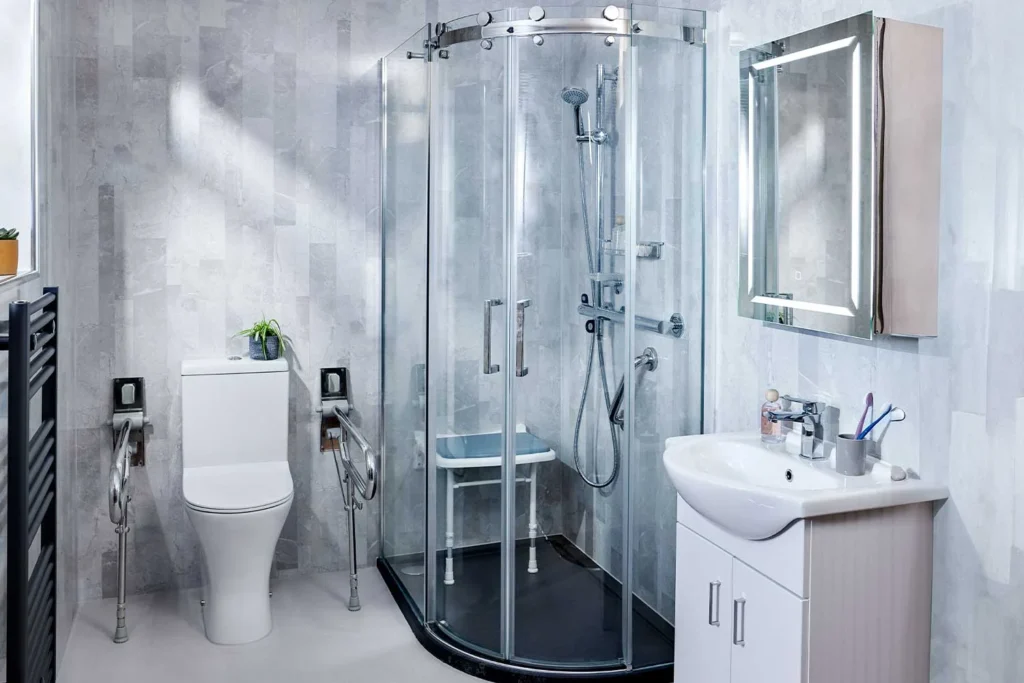
Bathroom adaptations exist on a wide spectrum. Many families start with small, low-disruption changes that improve confidence and reduce risk. Better lighting, non-slip flooring, or discreet support rails can make everyday use feel more manageable without changing how the room looks.
As needs change, more significant adaptations may be considered. Replacing a bath with a walk-in or level access shower can reduce the physical effort involved in washing. Introducing a wash and dry toilet can reduce twisting, reaching, and reliance on assistance, particularly for people with joint pain or reduced balance.
These decisions are rarely made all at once. Most families reassess over time, responding to what they observe rather than trying to predict the future.
Preserving Dignity Through Thoughtful Design
The most effective bathroom changes are often those that fade into the background. When adaptations are well designed, they support routines quietly, without drawing attention to limitations.
Feeling safe and comfortable encourages people to maintain independence for longer. Confidence in the bathroom often carries over into other areas of daily life, supporting overall wellbeing.
Taking a Long-Term, Flexible View
Supporting a loved one is rarely about finding a single solution. Needs evolve, and what works today may need adjustment later. Taking a flexible, step-by-step approach allows families to respond thoughtfully without overwhelming anyone involved.
At its best, adapting a bathroom is not about taking control away. It’s about creating an environment that allows someone to continue living in their home, on their own terms, with confidence and dignity.
January 27, 2026
One of the most common concerns people have about adapting...

January 27, 2026
Bathroom changes are often first considered by someone looking in...
January 27, 2026
A surprising number of small bathrooms in UK homes have...

November 21, 2025
AJT Showers Ltd Celebrates 7 Years of Trust, Quality, and...
Get In Touch
Opening hours
Monday - Friday 9:00am - 5:00pm
Saturday Appointment Only
Sunday Closed
Give us a call
0800 001 6649Send us an email
enquiries@ajtshowersltd.co.ukVisit our showroom
Unit C3, Riverside Industrial Estate,
Bridge Road, Littlehampton, BN17 5DF
Leave an Enquiry
Areas We Cover
We proudly serve the South East of England, specialising in accessible bathroom design and installation across a wide range of locations. Whether you’re in a bustling town or a quiet village, our expert team is nearby, ready to bring your vision to life with empathy and professionalism.
No matter where you are in these areas, we are committed to delivering accessible, bespoke bathrooms tailored to your needs with a local touch and expert care. Contact us for more information today to arrange your free home visit and discover how we can make your bathroom safer and more comfortable.
Call us on 0800 001 6649