


Supporting an Elderly or Disabled Person to Use an Accessible Bathroom
Did you know?
In 2021, there were an estimated 5.8 million informal care providers in the United Kingdom. People aged 46-65 were the largest age group to become unpaid carers, with 41% of people becoming unpaid carers in this age group.
Assisting an elderly or disabled person in using an accessible bathroom requires patience, empathy, and a good understanding of their specific needs. When you are learning how to assist someone with a shower or looking for safer ways to support a loved one, small adjustments can make a significant difference to safety, comfort, and independence.
In this blog, we outline some practical advice for assisting elderly or disabled individuals with showering and bathing.
10 Simple Strategies for Assisting Elderly and Disabled Individuals to Use an Accessible Bathroom
Keep Clear Pathways
Ensuring a clear and unobstructed pathway to the bathroom is one of the most important steps in improving safety. Clutter, loose rugs, trailing wires, or narrow walkways can quickly become hazards, particularly for individuals with reduced mobility or balance issues. Even small obstacles can increase the risk of trips and falls.
When someone is using a mobility aid such as a walker or a wheelchair, space is essential. Doorways should be wide enough, and furniture should be arranged to allow smooth, uninterrupted movement. Good accessibility not only reduces physical risk but also helps individuals feel more confident moving independently around their home.
Use Non-Slip Surfaces
Bathrooms are naturally high-risk environments due to water and smooth surfaces. When helping an elderly person shower, wet floors can quickly become dangerous if proper precautions are not in place. Make sure the bathroom floor is slip-resistant by using altro non-slip flooring and slip-resistant materials.
Install Grab Rails
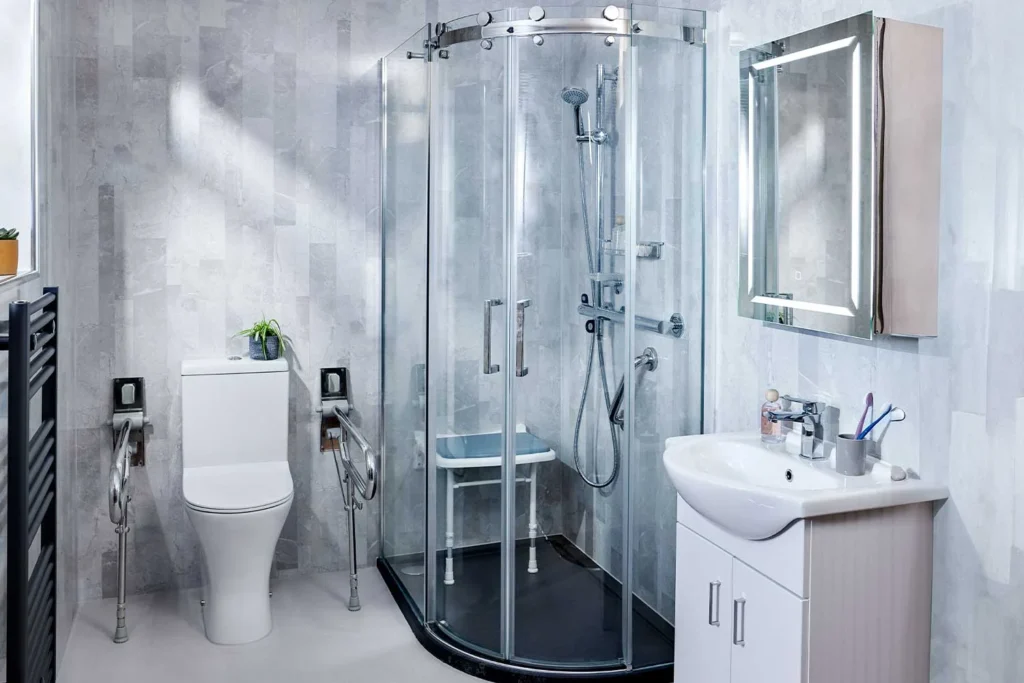
Install grab rails near the toilet, shower, and bathtub to provide stability and support. These bars can assist the person in standing, sitting, and maintaining balance.
Getting the placement of grab rails right is key; they should be positioned at comfortable heights and in locations where movement is most challenging. This not only improves stability but also builds confidence for the individual using the space.
Install a Comfort-Height Toilet
Consider using a comfort-height toilet seat to make it easier for the person to sit down and stand up. This can be particularly helpful for those with mobility issues.
Combining a comfort-height toilet seat with grab rails provides additional support and stability. Reducing the risk of falls helps to maintain independence, allowing individuals to use the toilet more comfortably and safely.
Use a Shower Chair or Bench
Provide a shower chair or bench in the shower area to allow the person to sit comfortably while bathing. This is especially important for those who cannot stand for extended periods.
When a caregiver is assisting someone with showering, a seated position provides better control and reduces physical strain. Seated showers allow for a more controlled and relaxed washing process, making it easier to support the individual without rushing or risking injury.
Use a Handheld Shower Head
Installing a handheld shower head that can be easily manoeuvred allows the elderly or disabled user or their caregiver to direct the water flow to the desired areas without straining.
A handheld showerhead’s flexibility is particularly important when learning how to assist someone with a shower, as it reduces the need for repositioning or unnecessary movement. It also helps create a more comfortable and controlled experience, allowing both the individual and caregiver to manage the process more effectively.
Keep Essentials Within Easy Reach
Ensure that toiletries, towels, and other necessary items are within easy reach. Keeping essential items such as soap, shampoo, towels, and washcloths within easy reach helps minimise unnecessary movement. This prevents the person from overreaching or straining themselves.
This setup is especially important when assisting an elderly person with a shower, as it allows the process to flow more smoothly. It also supports independence by enabling the individual to access items themselves where possible, reducing reliance on constant assistance.
Install an Accessible Sink
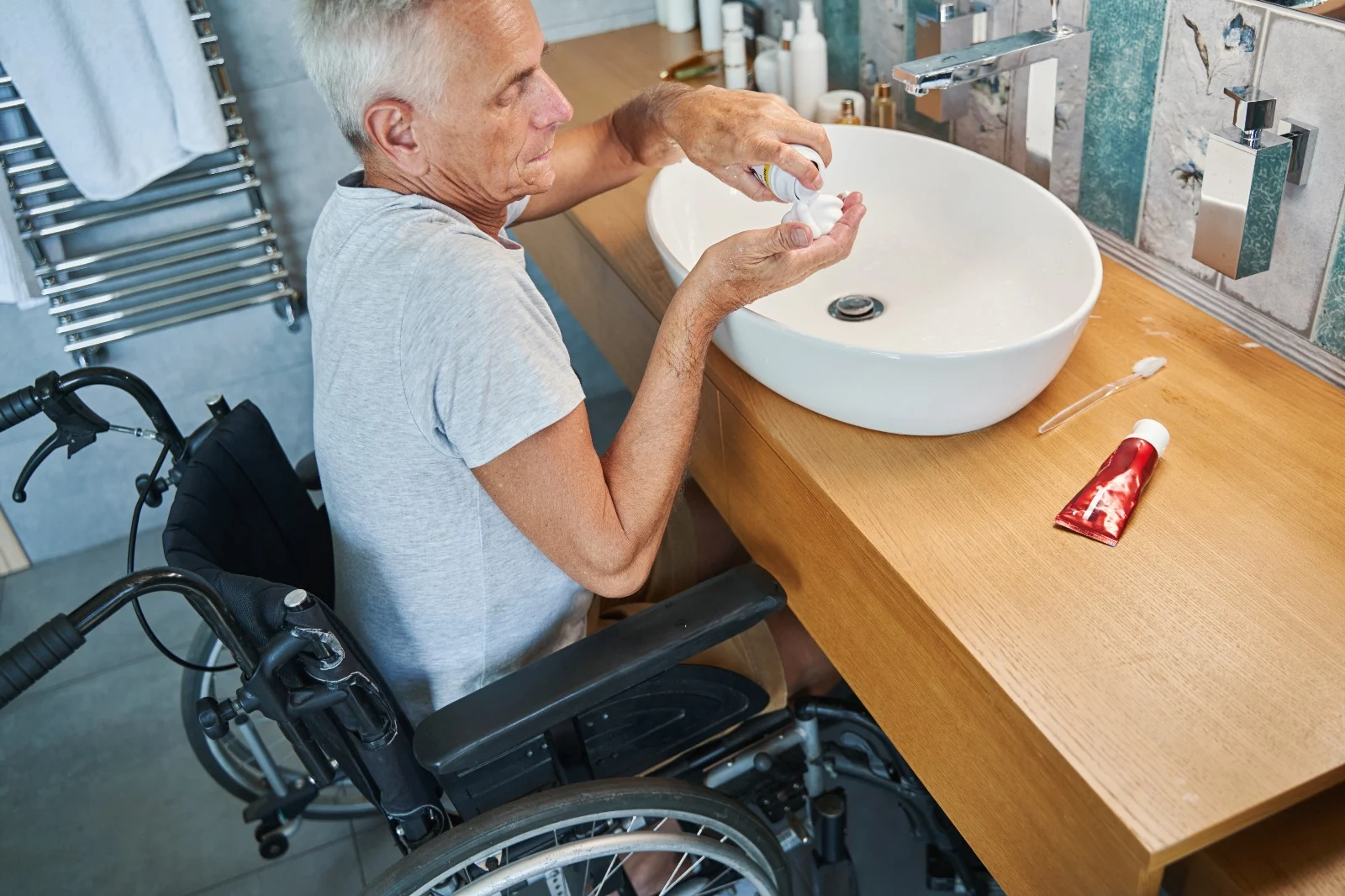
Opt for a sink with knee clearance underneath to accommodate wheelchair users. The faucet handles should be easy to operate, even for individuals with limited hand dexterity.
Use a Personalised Approach
Remember that everyone’s needs are unique. Always communicate with the individual to understand their preferences and limitations, and adjust your assistance accordingly.
Remember, while these strategies can be helpful, respecting the person’s independence and privacy is crucial. Always ask for their preferences and involve them in decisions regarding their bathroom routine.
Know When to Seek Additional Help
Understanding when extra support is needed can make a significant difference to both safety and overall wellbeing. If using the bathroom becomes increasingly difficult, uncomfortable, or risky, it may be time to consider additional help or adaptations.
The Importance of Making Bathing Accessible
Ensures Safety and Physical Wellbeing
Many elderly or disabled individuals face a higher risk of slips, falls, and accidents due to reduced mobility, balance issues, or fatigue. If you notice frequent near misses, difficulty standing, or instability when using the bathroom, these are clear signs that additional support or equipment is needed.
Seeking help early, whether through professional advice or bathroom adaptations, can prevent injuries and create a safer daily routine.
Protects Dignity, Independence and Communication
Maintaining dignity should always be at the centre of any care routine. Being able to use the bathroom independently, or with minimal assistance, helps preserve confidence and a sense of control.
Clear, respectful communication is essential. Asking for consent, explaining actions, and encouraging independence wherever possible helps build trust and ensures the individual feels comfortable and respected.
Improves Health, Comfort and Quality of Life
Accessible bathrooms support better hygiene, reduce physical strain, and improve overall comfort. Difficulty maintaining cleanliness or experiencing pain during bathroom use may indicate the need for changes to the environment or additional support.
Without the right setup, individuals may begin to withdraw from daily activities, leading to isolation and reduced quality of life. The right assistance not only improves physical health but also supports confidence, routine, and social engagement.
Support for Caregivers
Providing care can be physically and emotionally demanding. If assisting with bathing or bathroom use becomes difficult to manage safely, seeking guidance or investing in accessible solutions can reduce strain and improve the level of care provided.
Practical advice and support are available through the NHS, including guidance on helping someone maintain personal hygiene, alongside advice on how to lift, move and handle someone else.
Professional Bathroom Adaptations in the South East
At AJT Showers, we are dedicated to making bathing accessible for all. We are a friendly, family-run team who design and install accessible bathrooms across the South East of England for elderly individuals, people with disabilities, and their families and carers.
We take time to listen to your requirements and preferences, working closely with our clients to install the right bathing solution for them, whether that’s a walk-in shower, walk-in bath, or wet room.
If you’re looking to adapt your bathroom to make bathing easier and more comfortable for yourself or a loved one, contact us today to discuss how we can help, or visit our showroom in Littlehampton.
AJT Showers LTD
Author: Danielle
October 13, 2026
Making Bathrooms More Accessible for Someone with Arthritis For many...
September 2, 2026
Living with Alzheimer’s can make familiar everyday routines more challenging...
August 10, 2026
For someone living with Parkinson’s, everyday tasks can become more...

July 14, 2026
One of the most common questions we're asked is: "Can...
Get In Touch
Opening hours
Monday - Friday 9:00am - 5:00pm
Saturday Appointment Only
Sunday Closed
Give us a call
0800 001 6649Send us an email
enquiries@ajtshowersltd.co.ukVisit our showroom
Unit C3, Riverside Industrial Estate,
Bridge Road, Littlehampton, BN17 5DF
Areas We Cover
We proudly serve the South East of England, specialising in accessible bathroom design and installation across a wide range of locations. Whether you’re in a bustling town or a quiet village, our expert team is nearby, ready to bring your vision to life with empathy and professionalism.
No matter where you are in these areas, we are committed to delivering accessible, bespoke bathrooms tailored to your needs with a local touch and expert care. Contact us for more information today to arrange your free home visit and discover how we can make your bathroom safer and more comfortable.
Call us on 0800 001 6649